The popular casino table games
Walk onto any casino floor and the table games fall into a few families: video poker machines, blackjack and its cousins, the poker-based table games, and the pure-chance classics like roulette, craps and baccarat. What separates the casino table games from slots is that most of them involve a decision — and where there is a decision, there is a correct strategy that lowers the house edge. This guide ranks the popular casino games by how much that edge costs you and points you to the exact strategy for each.
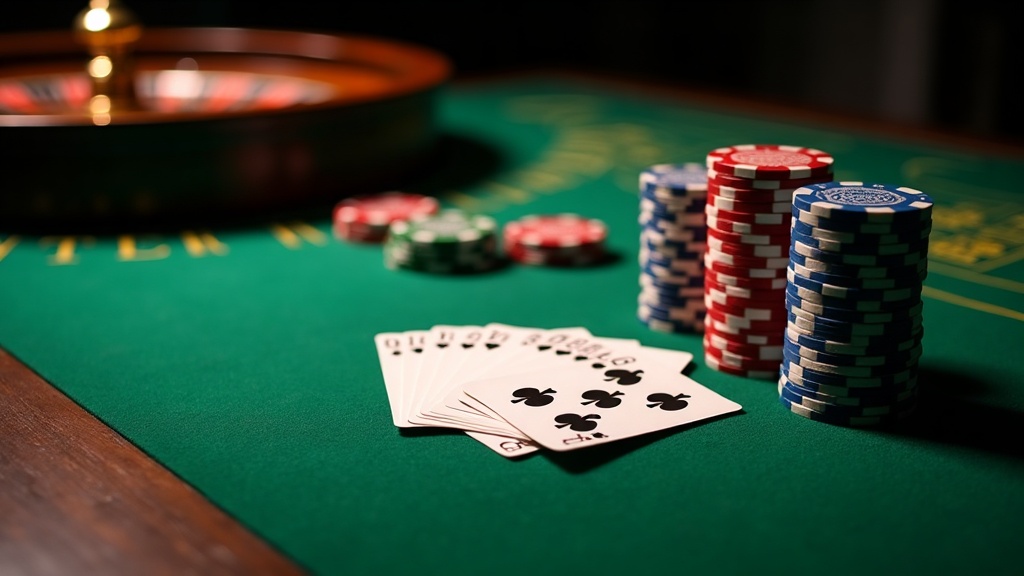
Casino table games ranked by house edge
Here are the games we cover, ordered from the lowest house edge to the highest under correct play. Each links to its strategy tool:
| Game | House edge | Strategy tool |
|---|---|---|
| Video Poker (9/6 Jacks or Better) | 0.46% | Analyzer & trainer |
| Spanish 21 | 0.40% | Spanish 21 strategy |
| Ultimate Texas Hold'em | 2.19% | UTH advisor |
| Pai Gow Poker | 2.50% | House-way calculator |
| Three Card Poker | 3.37% | 3-card strategy |
| Let It Ride | 3.51% | Let It Ride advisor |
| Caribbean Stud Poker | 5.22% | Raise/fold advisor |
For the full comparison including baccarat, roulette, craps and more, see the house edge hub, and price any game with the house edge calculator.
Video poker — the skill game
Video poker is the table game with the deepest strategy and the lowest house edge on the floor. You are dealt five cards, choose which to hold, and are paid on the final poker hand. Because a mathematically perfect play exists for every hand, a good player on a full-pay machine faces a house edge under half a percent. Start with our video poker analyzer and trainer, or read how the numbers work on the video poker house edge page.
The poker-based casino games
The poker-based casino table games — Ultimate Texas Hold'em, Three Card Poker, Pai Gow Poker, Let It Ride and Caribbean Stud — pit your five- or seven-card hand against the dealer with a single strategic decision or two. They are more forgiving to learn than video poker but carry a higher house edge, from around 2% for Ultimate Texas Hold'em up to 5% for Caribbean Stud. Each has a clean optimal strategy: the raise/fold rule in Ultimate Texas Hold'em and Caribbean Stud, the Q-6-4 line in Three Card Poker, the maximise-the-front principle in Pai Gow Poker, and the two-decision discipline of Let It Ride.
Blackjack, baccarat, roulette and craps
The classic casino table games round out the floor. Blackjack rewards basic strategy with a house edge near half a percent — build the exact chart for any rules with our sister site's blackjack chart maker, and try the low-edge variant on our Spanish 21 page. Baccarat needs no strategy at all: the banker bet carries a low 1.06% house edge, which is why it is a staple of the table games pit. Roulette is pure chance — stick to the single-zero European wheel (2.70%) over the American double-zero wheel (5.26%) — and craps offers some of the best bets in the casino on the pass line at 1.41%. None of these require memorising a chart, but knowing each game's house edge tells you which table to sit at.
Pick a game, learn the edge
The best casino table games for a knowledgeable player are the ones where strategy meaningfully lowers the house edge — video poker and blackjack first, then the poker-based games. Whichever you choose, every game we cover has its exact house edge and a free optimal-strategy tool on this site. Browse the full house edge comparison, then jump into the strategy for your game.
Frequently asked questions
What are the most popular casino table games?
Blackjack, baccarat, roulette and craps, plus the poker-based games — Ultimate Texas Hold'em, Three Card Poker, Pai Gow Poker, Let It Ride and Caribbean Stud — and video poker machines.
Which casino table game has the lowest house edge?
Full-pay video poker and blackjack with basic strategy lead at under 0.5%, followed by the baccarat banker bet at 1.06%.
House edges reflect correct play under common US rules and pay tables; specific tables vary. Educational content about probability, not gambling advice.