Bonus Poker hand analyzer
Bonus Poker uses the engine-verified 9/6 Jacks or Better base strategy, so this analyzer gives the exact optimal hold for any five-card Bonus Poker hand. Pick your cards and it ranks every hold by expected value — identical to Bonus Poker in every spot except the rare lone-ace choice covered below.
What is Bonus Poker?
Bonus Poker is a five-card draw video poker variant built on the Jacks or Better framework: you are dealt five cards, hold what you want, draw the rest, and the lowest paying hand is still a pair of jacks. What changes is four of a kind — instead of a flat payout it pays by rank. Four aces pays the most, four 2s–4s a middle tier, and four 5s–kings the standard amount. To fund those bigger quads the full house and flush are trimmed one step versus 9/6 Jacks or Better. That trade-off is why the full-pay 8/5 version returns about 99.2% to a perfect player — still among the better bets in the casino — and why aces gain a little extra value.
Bonus Poker pay table (8/5)
The standard full-pay table is called "8/5" after its full house and flush payouts. Here is the complete schedule, per coin bet:
| Hand | Pays (per coin) |
|---|---|
| Royal Flush | 250 (800 at max coins) |
| Straight Flush | 50 |
| Four Aces | 80 |
| Four 2s, 3s, 4s | 40 |
| Four 5s through Kings | 25 |
| Full House | 8 |
| Flush | 5 |
| Straight | 4 |
| Three of a Kind | 3 |
| Two Pair | 2 |
| Jacks or Better | 1 |
Full-pay Bonus Poker (8/5) returns ≈99.2% with perfect play. Always bet five coins — the royal only pays its full 800-for-1 rate at max bet, worth nearly 2% of return.
Bonus Poker strategy chart
This is the optimal hold order. Read your five cards from the top down and hold the first (highest) pattern you can make — it matches the engine-verified 9/6 Jacks or Better chart, with the ace note below:
- Four of a kind · straight flush · royal flush (hold the pat hand)
- 4 to a royal flush
- Three of a kind · straight · flush · full house (hold the pat hand)
- 4 to a straight flush
- Two pair
- High pair (JJ, QQ, KK, AA)
- 3 to a royal flush
- 4 to a flush
- Low pair (22 – TT)
- 4 to an outside straight
- 2 suited high cards
- 3 to a straight flush
- 2 unsuited high cards (if 3, keep the lowest two — but keep the ace, see below)
- Suited 10 + a high card (T-J, T-Q, T-K)
- One high card (prefer a lone ace)
- Draw five new cards
Every rule above the "one high card" line is shared exactly with Jacks or Better. Keep any made paying hand, break one only to draw at a royal, and never hold a kicker with a pair — those three habits capture most of Bonus Poker's value.
The key deviation: aces
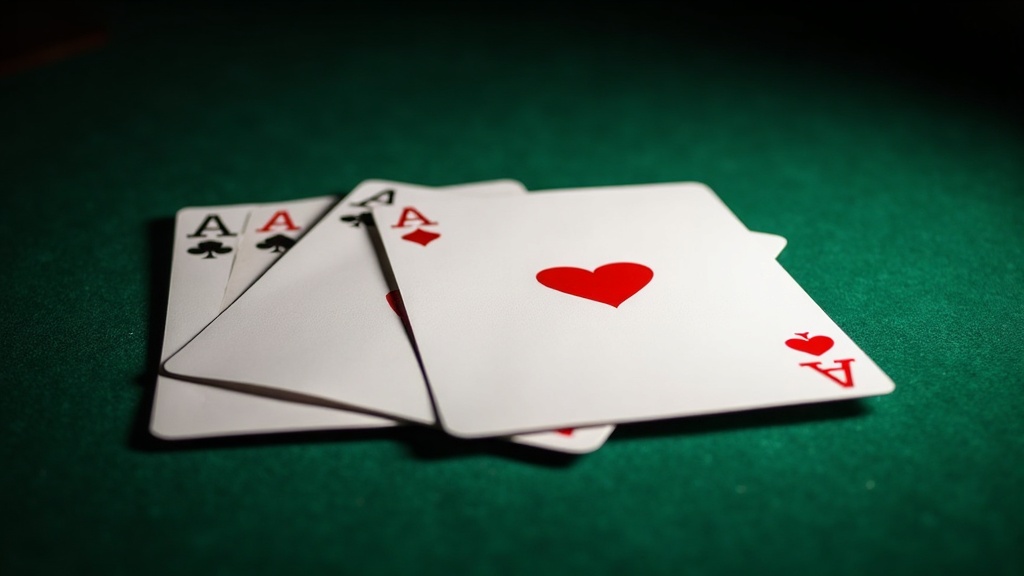
The one place Bonus Poker visibly differs from Jacks or Better is the lone ace. In Jacks or Better all four high cards are equal when you keep just one, so you keep the lowest for straight potential. Here the 80-for-1 four-aces payout makes the ace worth slightly more, so when choosing between single high cards the ace generally wins. It is a small edge over thousands of hands, but it is the signature adjustment and the reason the return sits a touch below 9/6 Jacks or Better despite the bigger quads. Beyond that, never "chase" quads: you should not break a paying hand or a good draw just because four aces would pay 80. Correct play still comes from the chart, not from hope.
The full house and flush trade-off
Bonus Poker pays 8 for a full house and 5 for a flush, where full-pay 9/6 Jacks or Better pays 9 and 6. That single step down is the entire cost of the quad bonuses, and it is why 8/5 Bonus Poker returns about 99.2% versus 99.54% for 9/6 Jacks or Better. It does not change how you play — you still keep full houses and flushes when dealt them — but it means you should confirm you are on a full-pay 8/5 machine first. Short-pay versions (7/5 or 6/5) quietly cost one to two percent for the identical game, so read the pay table every time; our pay tables guide shows how to grade a machine in seconds. If you enjoy Bonus Poker but want bigger quad payouts, Double Double Bonus adds kicker jackpots at higher variance, and Deuces Wild covers the wild-card side.
Frequently asked questions
Is Bonus Poker strategy different from Jacks or Better?
Almost not at all. Bonus Poker uses the same 9/6 Jacks or Better strategy chart, with only a small deviation around holding aces because four aces pay a bonus.
What is the house edge in Bonus Poker?
About 0.8% on the common 8/5 Bonus Poker pay table with correct strategy.
What is the best Bonus Poker pay table?
Full-pay 8/5, which pays 8 for a full house and 5 for a flush. Anything lower (7/5, 6/5) is short-pay and costs you money for the same game.
Strategy chart shared with engine-verified 9/6 Jacks or Better play; 8/5 Bonus Poker payback is the standard published figure. Educational content about probability and game theory, not gambling advice.